History of the Korean War
The history of the Korean War deals primarily with the June 25 War (6·25전쟁), which began with the surprise invasion of South Korea by North Korean forces on June 25, 1950, after the Korean Peninsula was liberated from imperial Japan’s colonial rule and subsequently divided into North and South by major powers.
1. Background and Causes of the Korean War
Immediately after liberation, the Korean Peninsula was divided into North and South along the 38th parallel north (북위 38도선) by the United States and the Soviet Union, and capitalist and communist systems were introduced respectively.
The direct cause of the war was Kim Il-sung (김일성), who, with support from the Soviet Union and China, launched a southward invasion to communize the Korean Peninsula. With superior military strength, North Korean forces captured the capital Seoul (서울) within three days of the outbreak of war and advanced southward.
2. The Korean Armistice
The Korean Armistice refers to the armistice agreement signed on July 27, 1953, between the United Nations Command and the North Korean and Chinese People’s Volunteer Forces, which brought a halt to the combat operations of the Korean War (6·25전쟁).
3. Main Contents of the Armistice Agreement
1) Background and Process of Conclusion
After the outbreak of war on June 25, 1950, North and South Korea engaged in fierce battles centered on the 38th parallel, but after about one year of stalemate, they sought a political resolution.
The armistice talks, which began in Kaesong (개성) on July 10, 1951, discussed various issues such as the establishment of the Military Demarcation Line, the armistice system, the repatriation of prisoners of war, and the withdrawal of foreign troops, and the agreement was concluded on July 27, 1953.
Until the conclusion of the agreement, 159 plenary sessions and 765 various meetings were held, with the issue of prisoner repatriation being the most contentious.
2) Contents of the Agreement
The agreement included the establishment of the Military Demarcation Line and the Demilitarized Zone, specific measures for the ceasefire, measures concerning prisoners of war, and recommendations to the governments of both sides.
It also agreed on the establishment of the Military Armistice Commission and the Neutral Nations Supervisory Commission, composed of Switzerland (스위스), Sweden (스웨덴), Czechoslovakia (체코), and Poland (폴란드).
3) Meaning and Impact
The armistice agreement did not completely end the war but merely halted combat operations, constituting a ceasefire (정전). North and South Korea continue to remain in an armistice state without an official peace treaty.
Even after the armistice, military confrontation, tension, and division became entrenched, and even today, more than 70 years later, the Korean Peninsula (한반도) remains in a state of armistice. In this way, the Korean Armistice (한국 휴전) represents a temporary suspension of war and a unique state of peace maintained within the Cold War structure, in which North and South Korea (남북한) have not officially ended the war.
4. The Wounds of the Korean War
The Korean War entrenched the division of the Korean Peninsula and left deep wounds on both North and South Korea.
In this way, the Korean War brought about the division of the Korean nation, ideological confrontation, international intervention, and the devastating consequences of war.
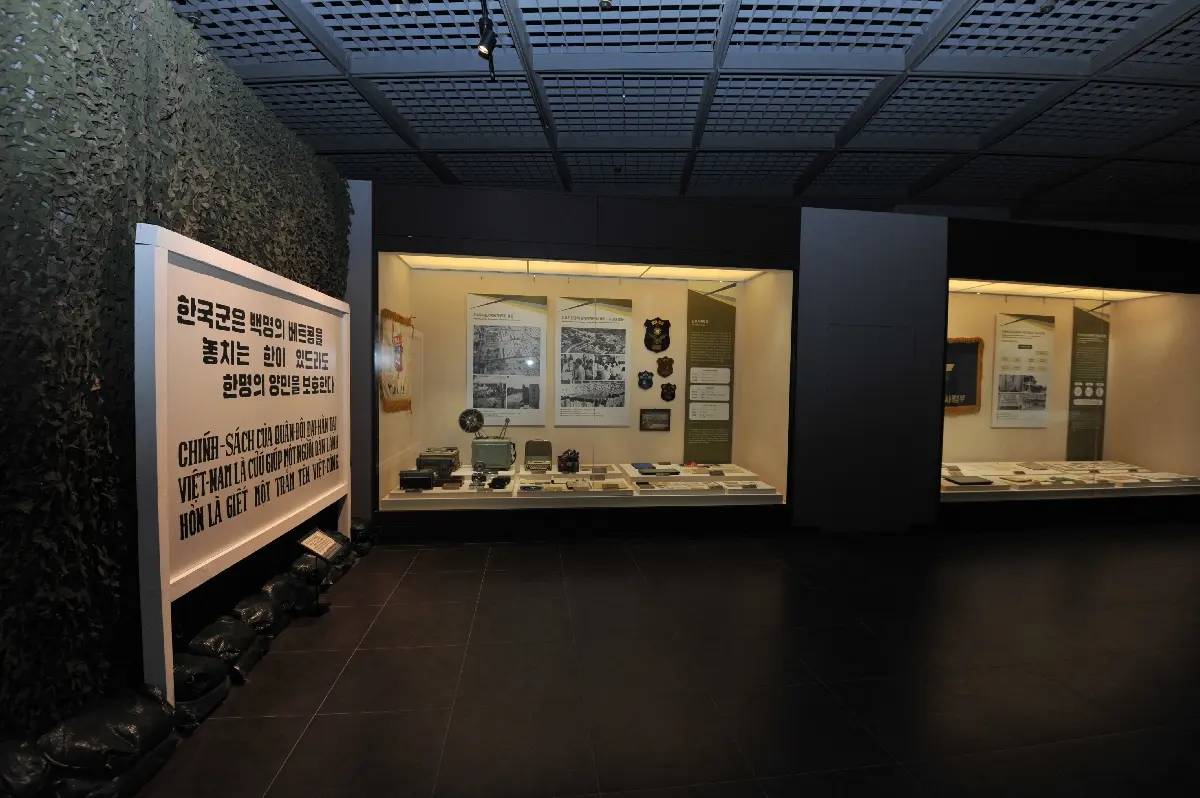
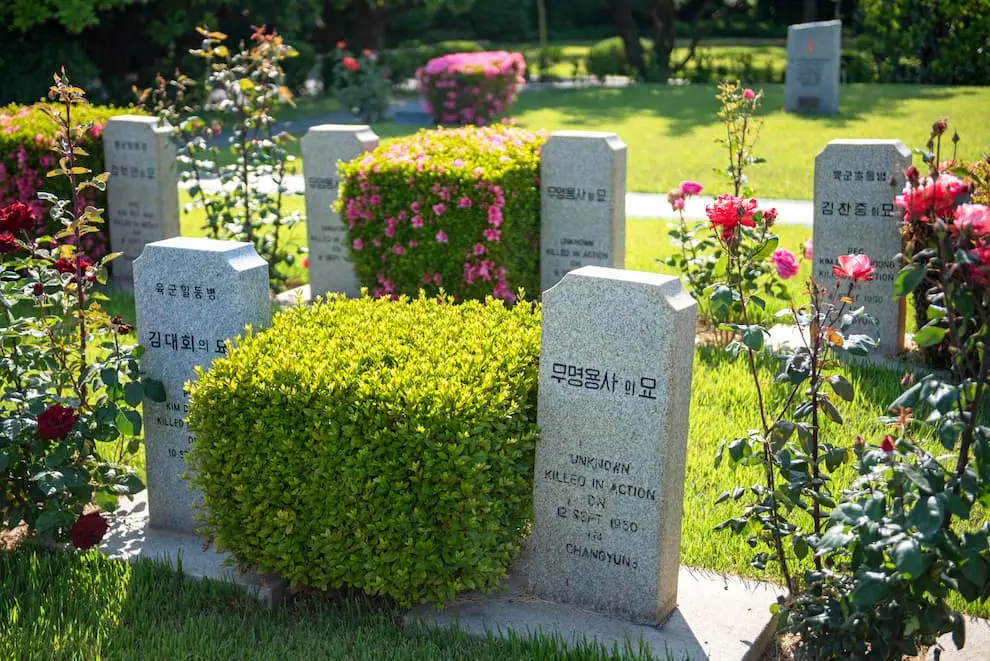
- Approximately 150,000 soldiers and about 1,000,000 civilians, totaling more than 4 million people, were killed or wounded; more than 50% of the national territory was destroyed, and national income decreased by 15%, resulting in severe economic damage.
- The occurrence of 10 million separated families (이산가족) and 100,000 war orphans (전쟁고아), leading to the disintegration of families and communities.
- Not the end of the war, but an armistice state (휴전 상태) → the existence of ongoing trauma and social anxiety affecting the generation that experienced the war and their descendants.
- Cultural losses such as the destruction of cultural heritage, the loss of places of life, and the rupture of collective memory.
5. After the Korean War – The Miracle on the Han River, Rapid Economic Growth in a Short Period and Its Shadows
After the Korean War, rapid economic growth, known as the Miracle on the Han River (한강의 기적), brought about positive development while simultaneously giving rise to various social problems. Economic aid from the international community, including the United States (미국), government-led economic development policies, and the strong enthusiasm for education and abundant labor force of the people became the foundation of growth. However, in this process, various negative phenomena also emerged at the same time, including generational conflict, violations of workers’ human rights, widening income inequality, environmental destruction, and low birth rates.
Related Sites