Japanese Colonial Period
The period of 35 years from 1910, when Joseon (Korea, 조선·한국) lost its national sovereignty to Japan, until liberation in 1945.
1. The 1910s: Military Rule and Extreme Oppression
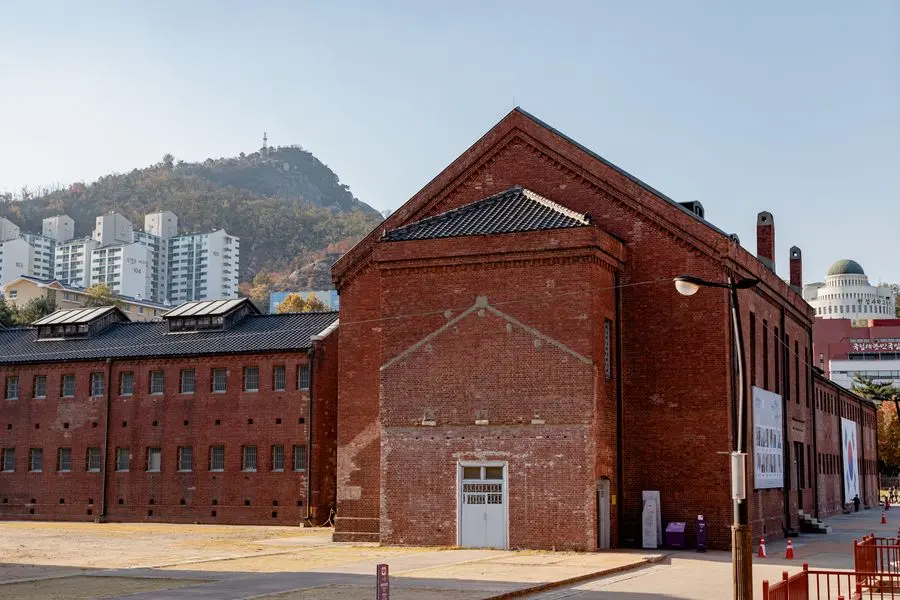
After the Japan–Korea Annexation Treaty of 1910 (한일 병합 조약), Japan established the Government-General of Korea (조선총독부), disarmed Korea, and implemented an extremely oppressive military rule through the gendarmerie police system (헌병경찰제). Military officers appointed as Governors-General seized all administrative, legislative, judicial, and military authority, and through the four major evil laws of Japanese imperial rule (the Security Law 보안법, Newspaper Law 신문지법, Publication Law 출판법, and Private School Ordinance 사립학교령), they strictly controlled the press, assemblies, and even private educational activities. Gendarmes and police were granted summary punishment authority (즉결처분권), and brutal physical punishments such as flogging (태형 제도) were routinely carried out. Those who resisted were mercilessly punished, including their families and civilians who offered assistance.
★ The March 1st Movement of 1919 (1919년 3·1운동): The Largest Nonviolent Independence Protest of the Nation
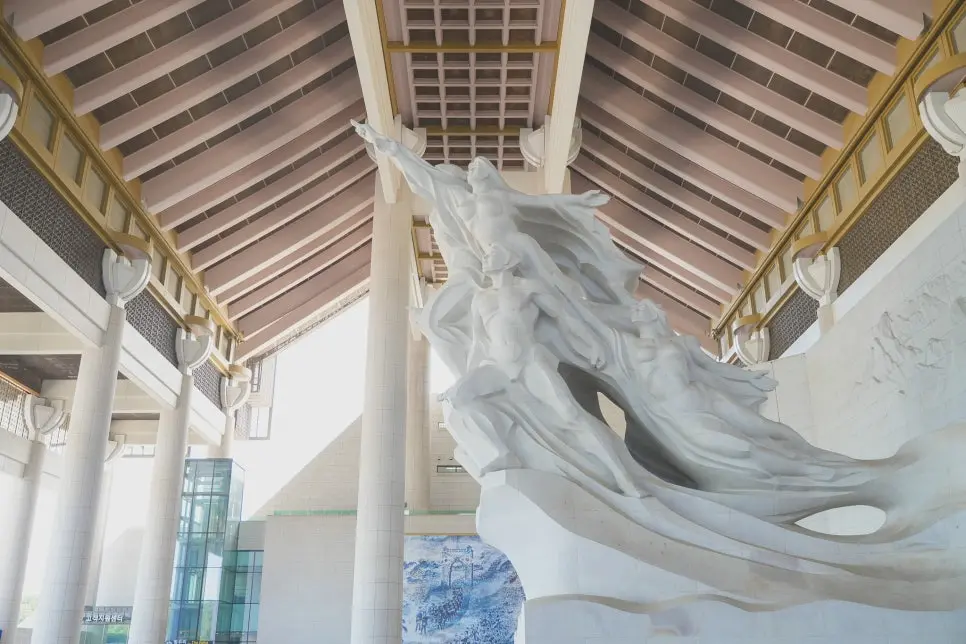
On March 1, 1919, countless people across the country read aloud the Declaration of Independence (독립선언서) and held demonstrations, shouting for independence. This was the largest nonviolent resistance movement in Korean history, proclaiming the will for independence to the world. However, Japan mobilized gendarmes, police, and even regular troops to brutally suppress the demonstrators. Approximately 47,000 people were arrested, 7,509 were killed, and 15,961 were injured. Acts of arson against homes, churches, and schools were committed, and atrocious crimes such as torture were inflicted indiscriminately on men and women, young and old.
2. The 1920s: Cultural Rule and the Diversification of National Movements
Shocked by the March 1st Movement (3·1운동), Japan outwardly shifted to so-called cultural rule (문화통치), allowing limited reforms to the police system and partial freedoms in the press and education. In reality, however, it more precisely suppressed independence activists and organizations through laws such as the Public Order Maintenance Law (치안유지법). During this time, diverse forms of resistance emerged both domestically and abroad. Overseas, the Provisional Government of the Republic of Korea (대한민국 임시정부) was established in Shanghai (상하이), and armed struggles were carried out from independence army bases in the Manchuria region (만주 지역).
3. The 1930s: Policies of National Eradication and Extreme Assimilation and Exploitation
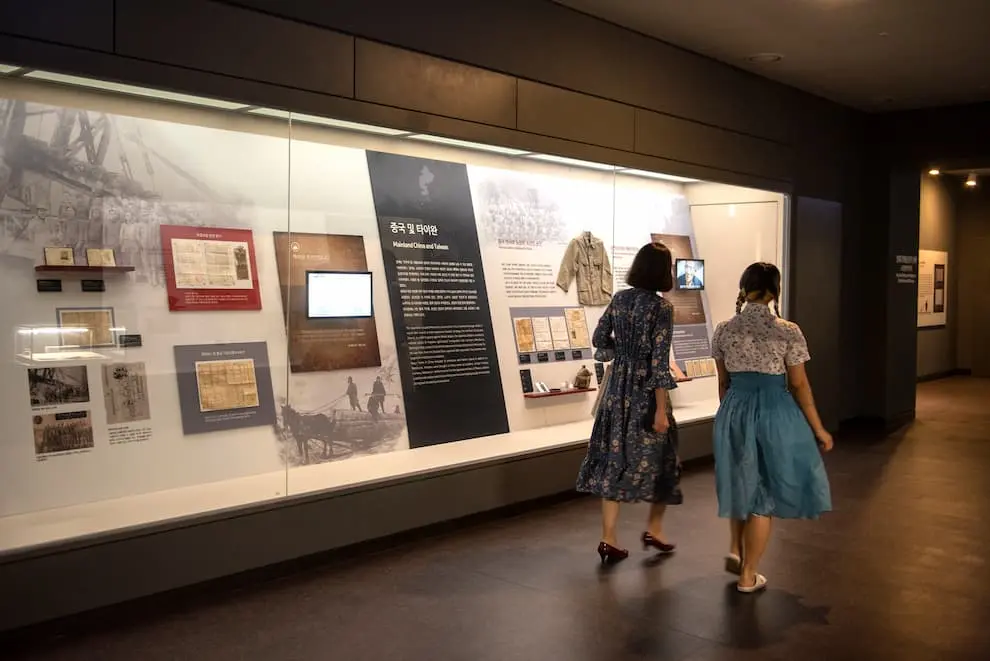
After the Manchurian Incident of 1931 (만주사변) and the Second Sino-Japanese War of 1937 (중일전쟁), the Japanese empire pursued policies aimed at thoroughly assimilating Koreans into Japanese identity, known as policies of national eradication (민족말살정책). These included the forced use of the Japanese language and Japanese-style names, compulsory shrine worship (신사참배), distortion of national history, and the prohibition of the Korean language and Korean history, all intended to eradicate national identity. Through various mobilization orders, hundreds of thousands of young Koreans were forcibly conscripted as laborers and soldiers and taken to Japan and battlefields of the Second World War (세계2차대전). These policies sought to reduce Koreans to official and unofficial lower classes and slaves within Japan, thoroughly trampling human rights, while economic exploitation such as the extraction of rice and natural resources reached extreme levels.
4. Liberation and the Cold War Era (광복과 냉전시대)
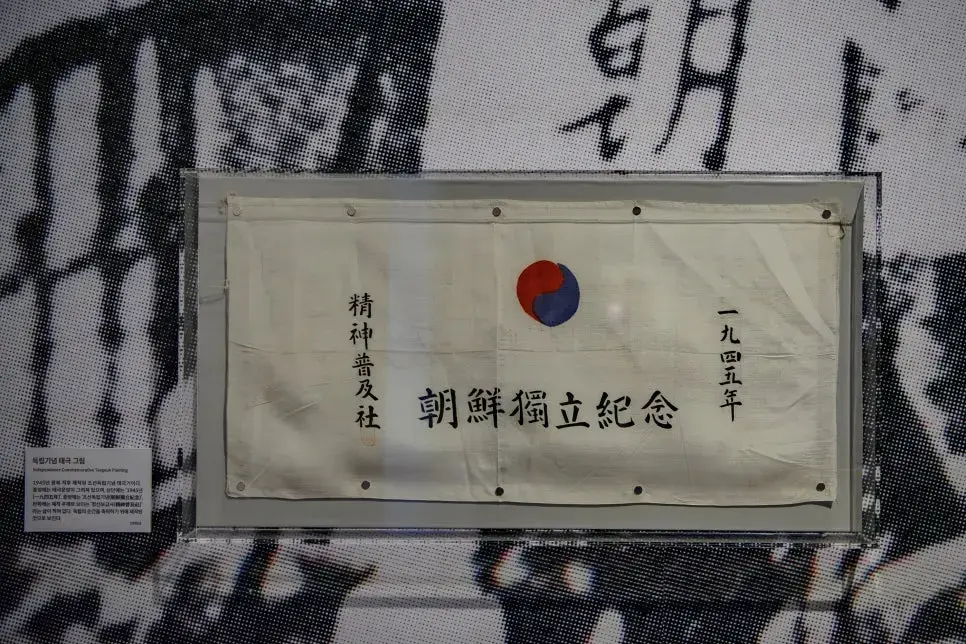
On August 15, 1945, with Japan’s unconditional surrender, Korea was finally liberated from 35 years of Japanese colonial rule. The moment of Korea’s liberation was the result of the nation’s fierce efforts in the independence movement and the historic upheaval of the Allied victory in the Second World War (세계 2차 대전).
Liberation came suddenly with Japan’s defeat. Due to U.S. air bombardments, the Soviet Union’s entry into the war, and the dropping of atomic bombs, Japan declared its surrender, and accordingly Joseon (Korea, 조선·한국) was freed from Japanese rule. Because of the strategic position of the Korean Peninsula, U.S. forces advanced into areas south of the 38th parallel (38도선), while Soviet forces entered the northern areas, and each side implemented military governance.
Immediately after liberation, the Korean Peninsula became fully entangled in the Cold War structure of international politics as U.S. and Soviet forces divided and occupied the South and the North, respectively. The Soviet Union supported communist forces and swiftly established people’s committees in the northern regions, while the United States supported the southern regions and set up a military government administration. The Allied Powers discussed trusteeship over the Korean Peninsula, but amid ideological confrontation, the U.S.–Soviet Joint Commission (미·소 공동위원회) ended without results. Eventually, in 1948, the Republic of Korea (대한민국) was established in the South, and the Democratic People’s Republic of Korea (조선민주주의인민공화국) was established in the North, marking the beginning of the tragedy of permanent division on the Korean Peninsula.
Thus, Korea’s liberation was shaped by a complex intertwining of the Korean people’s independence movement and preparation, the international upheaval of the Second World War, and the strategic interests of the U.S.–Soviet Cold War system. Together with the joy of liberation, a new era of suffering marked by division came upon the nation.
Related Sites